training

DHS Outlines Steps Houses of Worship Can Take To Protect Themselves
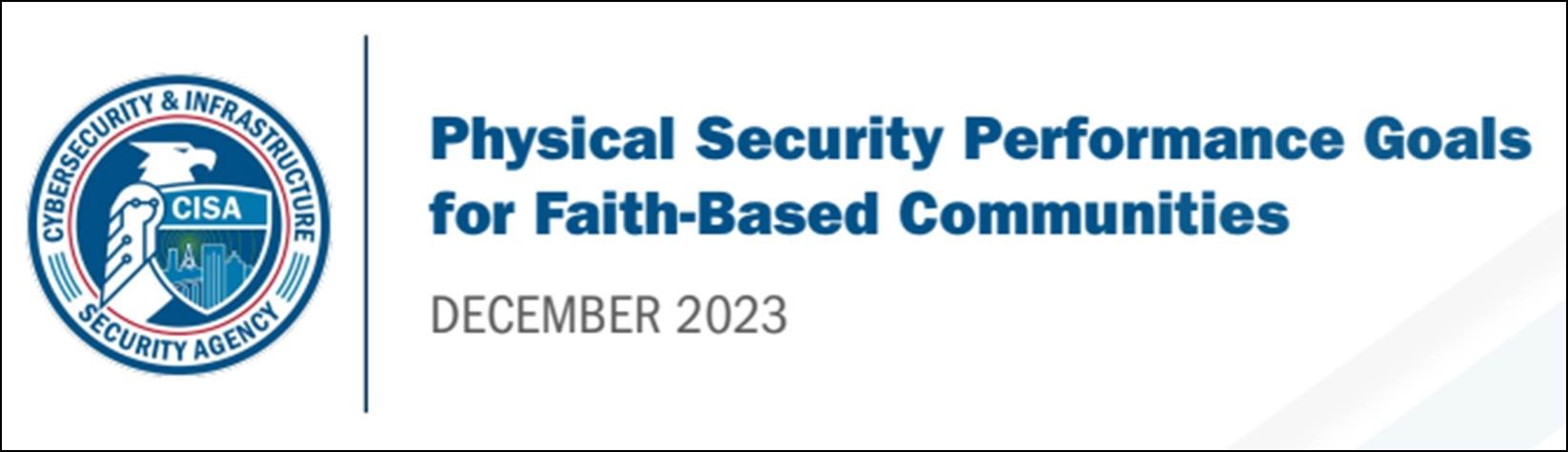
To “mitigate the threat of targeted violence and prepare for potential incidents” against churches, synagogues, temples, and mosques, the Department of Homeland Security (DHS) released Dec. 6, 2023 the PDF guide, Physical Security Performance Goals for Faith-Based Communities, which outlines measures “faith-based communities” can take to protect themselves from current vicious tensions.

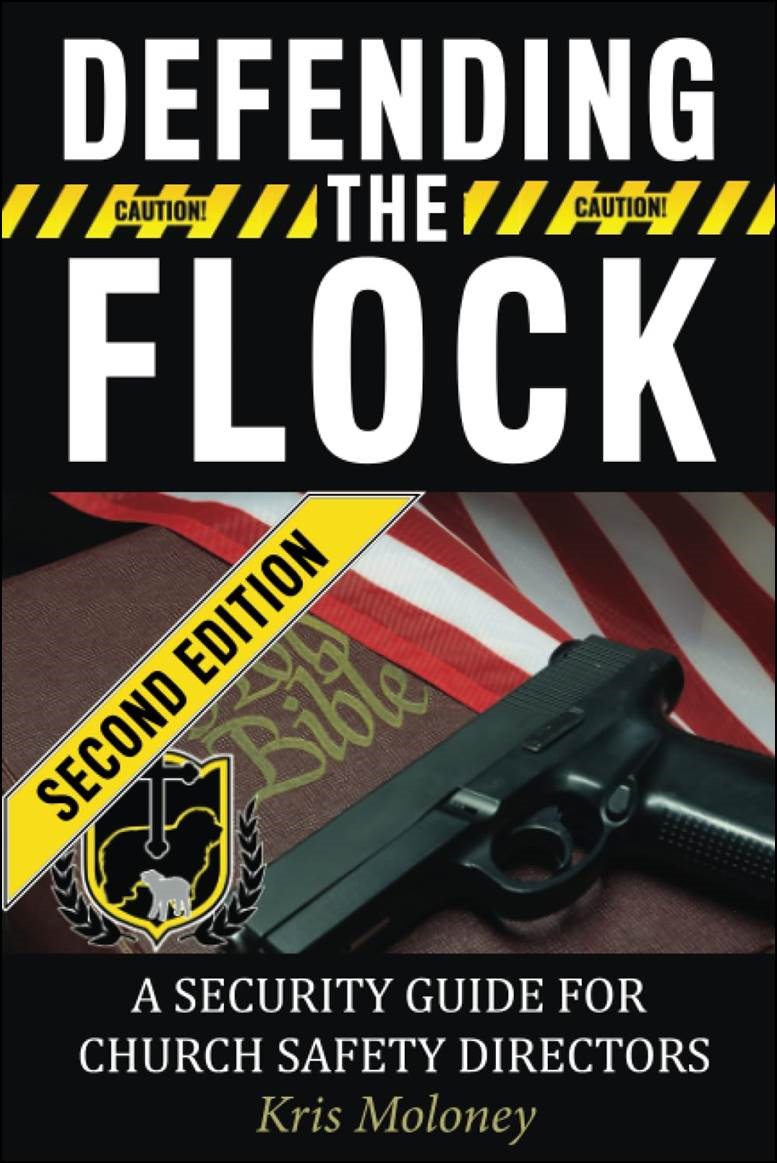
[ Read the SemperVerus article, Church Security Book Review: Defending the Flock ]

This guide comes as reported hate crimes have spiked since the onset of the war between Israel and the Palestinian terrorist group Hamas, according to FBI Director Christopher Wray.

[ Read the SemperVerus article, A Prayer for Church Security Team Members ]

DHS emphasized in its 2024 Homeland Threat Assessment that the danger of violence from individuals radicalized in the United States will “remain high . . . marked by lone offenders or small group attacks that occur with little warning.”

[ Read the SemperVerus article, Chart: The Spectrum of Potential Threat Personas in Self-Defense and Church Security ]

The 16-page document examines threats and vulnerabilities to provide targeted strategies organized by the functional categories of Identify, Protect, Detect, Respond, and Recover. It also includes a glossary of security-related words and phrases, and links to multiple resources under each category. Here are some of the guide’s recommendations:
Continue reading »

Church Security Book Review: Defending the Flock

The US is in a heightened threat environment due to violent conflicts around the world, according to the Department of Homeland Security (DHS).

[ Read the SemperVerus article, Enroll in the Sheepdog Church Security Academy Safety Member Certification Program ]

Lone offenders, motivated by a range of savage ideologies, pose the most likely threat. DHS urges the American public to stay vigilant.

[ Read SemperVerus articles on the topic of SITUATIONAL AWARENESS ]

Middle East expert Walid Phares says the charter of the terrorist organization Hamas calls for not only the killing of Jews and the elimination of Israel, but also for the killing of Christians worldwide. He says, “This is a jihadist movement, and it is manifesting itself in America and Canada, and in Western Europe. We have never been at this level of danger for our democratic world.”

[ Read the SemperVerus article, Chart: The Spectrum of Potential Threat Personas in Self-Defense and Church Security ]

Acts of targeted violence against houses of worship are a real—and potentially growing—problem in the United States, says the DHS. The best way to mitigate a potential attack is to take a holistic approach to security.

[ Read the SemperVerus article, A Prayer for Church Security Team Members ]

A necessary and excellent resource for establishing a well-rounded, comprehensive church security program is the book, Defending the Flock: A Security Guide for Church Safety Directors by veteran police officer, retired Army captain, founder of Sheepdog Church Security (SDCS), and creator of the Sheepdog Church Security Academy Safety Member Certification program, Kris Moloney.

Continue reading »

An Attempt to Define Pistol Size Categories

Are you confused about the different category names that are supposed to clearly identify handgun sizes? You’re not alone.

“Pistol size categories are notoriously ambiguous. What’s the difference between a micro compact and a subcompact? We don’t know, and we’re pretty sure nobody else does either,” says Chris Baker of LuckyGunner.com in the video below. “A handgun’s physical dimensions—its size, shape, and weight—largely determine how well it will fit our hands and whether we’re likely to find it comfortable and concealable as a carry gun.”

[ Read the SemperVerus article, Checklist: Matters to Consider When Deciding on a Handgun ]

Watch the video to get a feel for the different categories:

  • full size (also called duty size)
  • compact
  • subcompact
  • micro compact
  • pocket
  • single stack
  • double stack
Continue reading »

Situational Awareness: What Are You NOT Seeing?

Situational awareness is intentionally being aware of possible threats in your everyday surroundings. But there’s more to it than what is obviously observable.

You need to also ask yourself, “What am I NOT seeing?”

That question comprises two sub-questions:

  • “What IS there that I SHOULD be seeing but I’m NOT seeing it?” and
  • “What ISN’T there that SHOULD be there that I’m NOT seeing?”

[ Read the SemperVerus article, Situational Awareness: 14 Ways to Walk Like You Drive ]

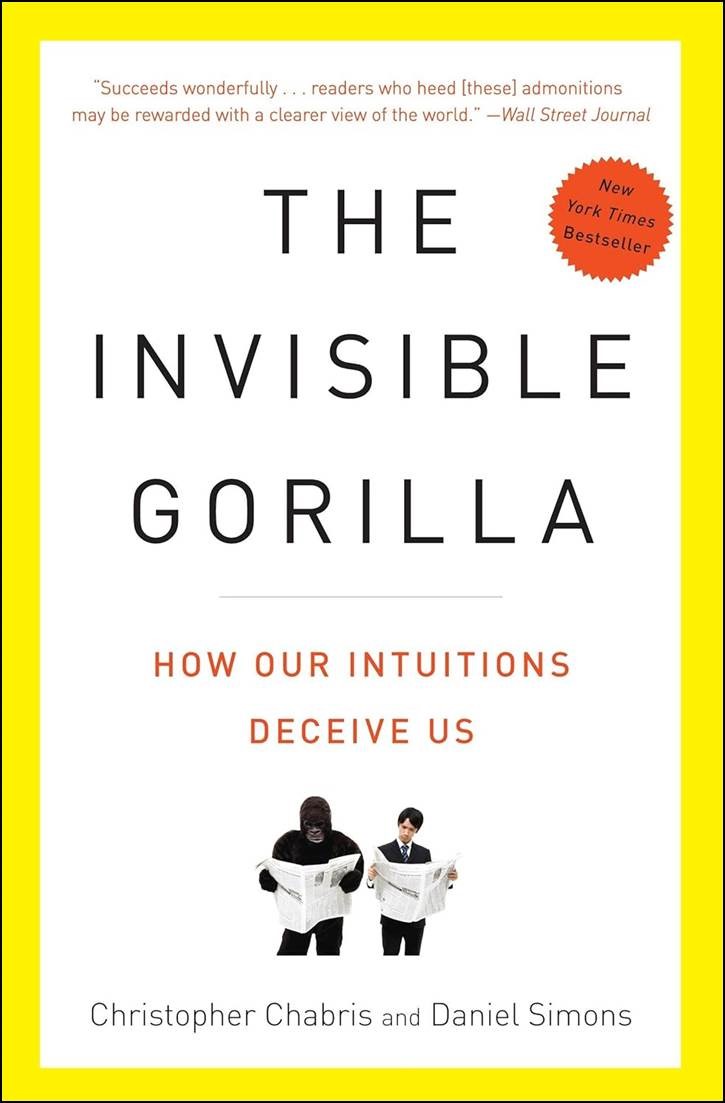
“Looking isn’t the same as seeing. You have to focus attention on something in order to become aware of it,” says Prof. Daniel Simons. “We know when we notice something unexpected, but we’re not aware of the times when we miss something unexpected….We need to filter out the distractions from our world and not let them interfere with our ability to do the task we’re trying to do.”

In self-defense situational awareness, it’s important to “filter out the distractions” and focus on both what IS in front of our eyes and what SHOULD be in front of our eyes but isn’t. Take the challenges in the videos below and see how attentive you are.

Continue reading »

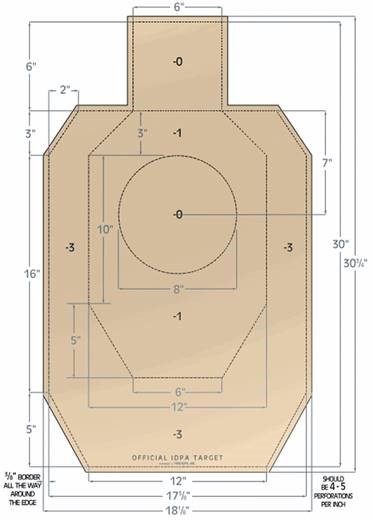
IDPA: Practical Training for Self-Defense and Church Security

If you conceal carry for the purpose of being ready to defend yourself or others in the event of a lethal threat—including while volunteering on your church security team—you should consider becoming a member of the International Defensive Pistol Association (IDPA), the shooting sport that simulates self-defense scenarios and real life encounters.

[ Read articles in the SemperVerus category of Church Security ]

Regularly conducting drills at your local gun range by standing in a lane and firing at a static bullseye target is important and helps develop and maintain your shooting skill and marksmanship. But it doesn’t reflect real-world environments where you need to move, draw from your concealed holster, seek cover, and make on-the-spot “shoot” and “don’t-shoot” decisions against one or multiple targets.

Continue reading »

Church Security Training: Decision Decks Help You Think Through a Crisis Before It Happens (A Review)

Here’s a simple way to prepare your mindset for the unexpected!

[ Read the SemperVerus article, A Prayer for Church Security Team Members ]

Whether personal self-defense or serving on your church security team, anticipating potential threats is a crucial skill we must hone as rigorously as we sharpen our defensive shooting accuracy in the time we spend at the range.

[ Read the SemperVerus article, Chart: The Spectrum of Potential Threat Personas in Self-Defense and Church Security ]

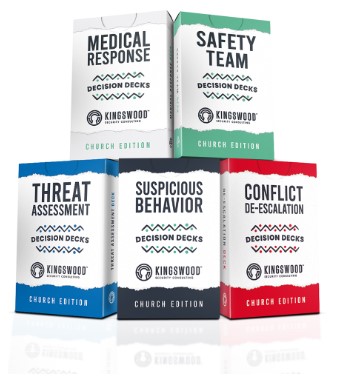
One way to accomplish this is with Decision Decks, five packs of cards—60 scenario cards per pack (also available as mobile apps in the Apple Store and Google Play)—to enhance situational awareness problem solving and decision making abilities, created by Simon Osamoh, founder and president of Kingswood Security Consulting and the Worship Security Academy, and former head of counter-terrorism at Mall of America, Minnesota, where he oversaw the internationally-recognized behavior threat assessment team.

[ Read the SemperVerus article, Interview with Simon Osamoh of Kingswood Security Consulting ]

You already know about the benefits of dry-fire training in the comfort of your home; in the same manner, Decision Decks are pre-crisis mental workouts you can contemplate anywhere to sharpen your readiness.

Continue reading »

Chart: The Spectrum of Potential Threat Personas in Self-Defense and Church Security

[ Read articles in the SemperVerus category of Church Security ]

Among the ways of being prepared for unexpected self-defense or church security situations is to intentionally engage your mind to think about possible dangerous scenarios you could encounter and the ways in which you’d respond to them.

[ Read articles in the SemperVerus category of Situational Awareness ]

To help you conduct these mental exercises in a “gaming” fashion, SemperVerus has created the chart below listing at least 36 character personas that could be motivating factors in threatening crises. They represent the spectrum from seemingly minor incidents to major violent acts perpetrated by either males or females: from a “lone wolf” (a single bad actor) to a “wolf pack” (a gang with malevolent intentions); from rational to irrational behavior; from opportunistic to premeditated; from vandalism to synchronized active killers.

[ Read the SemperVerus article, Gentle Response De-Escalation Training for Church Security Teams ]

[ Read the SemperVerus article, Components of a Strong Mindset for the Legally Armed Citizen ]

Regularly think through each persona and plan for your own actions in meeting them head-on. For example, what would be your first move if a lone and crazed person accosted you on the street? What would you do if, during your volunteer shift on church security, a coordinated attack of active killers (high on the synthetic stimulant Captagon like these terrorists) simultaneously entered your church through two wings of the building? Plan now to be prepared!

[ Read the SemperVerus article, Concealed Carry Daily Prayer ]

Continue reading »

Situational Awareness: 14 Ways to Walk Like You Drive

How to Improve Your Situational Awareness.

You’ve heard the admonition to “Drive Defensively.” It means to always be ready for the possibility of encountering any dangerous occurrence while driving your vehicle. Be prepared. Think ahead. Anticipate hazards.

[ Read the SemperVerus article, Self-Defense Tactical Driving Tips ]

The scene doesn’t even have to be treacherous. For example, when you’re about to turn a street corner, it merely involves thinking through several sets in succession in what should be an automatic reflex:

  1. Most of your braking should be done in a straight line, before the corner.
  2. Trail off the brake smoothly as you turn in and enter the corner.
  3. Look through the corner for the exit.
  4. Apply throttle as you straighten the wheel back out at the exit.
  5. Choose your speed and driving lines based on the next corner, not just the one you’re in.*

Take the lessons you’ve learned in defensive driving and apply them as situational awareness techniques to your walking environment. Blogger Chris Bird says, “The goal is to be able to use your awareness to detect, assess, avoid, evade, counter, and prevail in the encounter.” These precautions may seem overwhelming at first in your everyday life, but remember, they’ve become second-nature to you when driving and they can be the same when walking.

[ Read SemperVerus articles on the subject of SITUATIONAL AWARENESS ]
Prepare and Know Your Route
Just as you type your destination into an online map to determine your most efficient trip from point A to point B, think through the avenues, streets, sidewalks, and paths, as well as time of day and other factors before you set out walking to avoid sketchy parts of town and to have the confidence of knowing where you’re going and how to get there.

Continue reading »

Video: How to Manage a Stranger’s Approach and Maintain Self-Defense

You’re walking from your car in a parking lot or standing on a downtown sidewalk and you observe a stranger coming your way who appears determined to talk with you. Not knowing if his intentions are malicious or innocent, what should you do to protect yourself as he closes distance with you? Is he preparing to spring an attack on you? Does he have an accomplice coming up behind you?

[ Read the SemperVerus article, Why 21 Feet Is Not a ‘Safe’ Distance ]

In the TriggerTimeTV.com video below, self-defense trainer Craig Douglas of Shivworks offers a combination of three techniques to always use to properly and safely “manage unknown contacts” who encroach into your personal space when in public.

[ Read the SemperVerus article, A Simple Chart for Situational Awareness ]

The three skills encompass what, how, and where:

Continue reading »

Components of a Strong Mindset for the Legally Armed Citizen

Components of a Strong Mindset for the Armed Citizen by ConcealedCarry.comThe website ConcealedCarry.com is a rich resource of information that helps guide legally armed people in the responsible practice of carrying concealed a defensive firearm.

One example is the article, Developing and Understanding A Strong Defensive Mindset, by Jacob Paulsen, president of ConcealedCarry.com, and its accompanying “mindset” chart.

[ Read the SemperVerus article, How Does Your Character Measure Up? ]

Mindset is defined as the established set of attitudes each of us hold; the general frame of reference through which we observe life, interpret it, and make trivial and serious decisions in response to what we encounter every day.

Click the chart to enlarge it, scan the key points of it below, read the entire article at ConcealedCarry.com, and be sure to read the SemperVerus articles below.

Continue reading »

Verse of the Day

Loading…

Powered by BibleGateway.com

Search SemperVerus

Lookup a word or passage in the Bible


BibleGateway.com
Include this form on your page
Scroll to Top

Subscribe to SemperVerus®

Get new posts delivered to your inbox.